

-
-
PROCESSESOur products range from induction melting furnaces ranging from 50kg to 15,000KG capacity, and our induction power suppliers range from 80KW to 12,000KW to meet all melting needs.
-
ADVANTAGEHTGP provides a systematic solution for scrap aluminum melting and casting.
-
EVENTS & NEWS
Boric Acid Additives in Crucible Sand: Functions and Effects
Release time:
Jul 08,2026
source:
Boric Acid Additives and Their Functions in Crucible Sand
In the preparation of crucible sand, besides the basic refractory materials, a small amount of additives is sometimes added, such as boric acid, brine, water glass, and titanium dioxide. The purpose of using additives is to improve the sintering quality of the crucible lining. Among these additives, boric acid (H3BO3) is the most widely used.
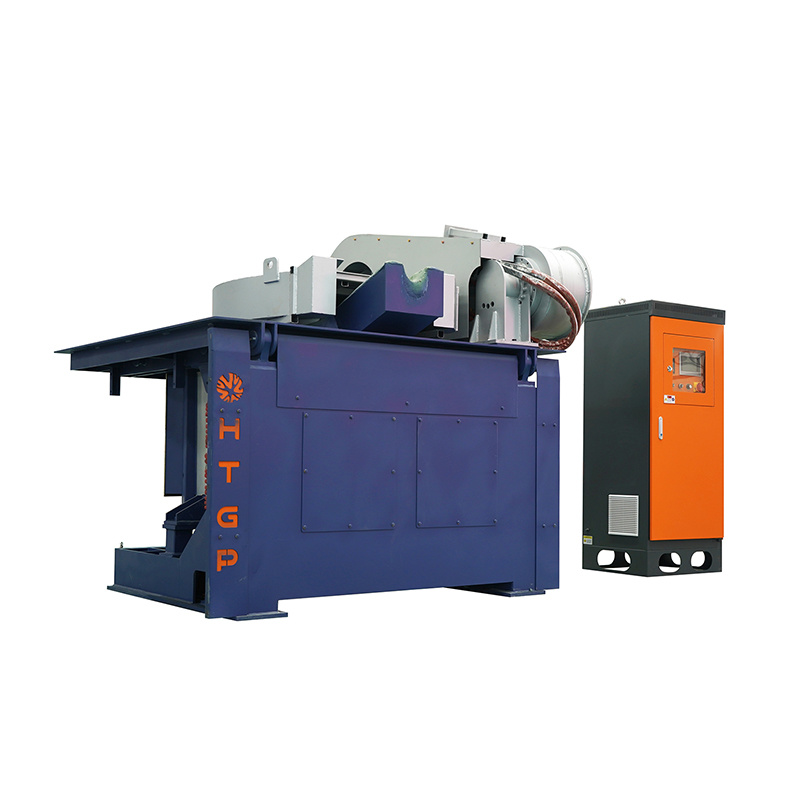
Boric acid plays several important roles in furnace lining materials, especially in reducing sintering temperature, promoting spinel formation, improving refractoriness, and controlling the volume change of crucible sand during heating.
1. Reducing the Sintering Temperature of Sand
One of the main purposes of adding boric acid to crucible sand is to reduce its sintering temperature. Under normal conditions, the sintering temperature of magnesia sand is about 1750°C, while that of quartz sand is about 1450°C. When the iron-shell or steel-plate core sintering method is used, the maximum sintering temperature is only about 1350°C.
Therefore, in order to obtain a sintered layer with sufficient strength, the sintering temperature of the sand must be reduced. Adding a certain amount of boric acid to the sand can achieve this effect.
During heating, boric acid dehydrates and exists in the sand as B2O3. At 1000-1300°C, B2O3 reacts with CaO, MgO, SiO2, and other components in the sand to form low-melting-point compounds. Since B2O3 can form compounds with melting points below 1450°C, the sintering process can proceed at a relatively lower temperature.
Typical compounds and their melting points include:
| Compound | Melting Point |
|---|---|
| CaO·B2O3 | 970°C |
| CaO·B2O3·2SiO2 | 1000°C |
| 2Al2O3·2B2O3 | 1020°C |
| 9Al2O3·2B2O3 | 1430°C |
| SiO2·B2O3 | 1200°C |
| MgO·B2O3 | 1142°C |
| 2MgO·B2O3 | 1342°C |
| 3MgO·B2O3 | 1366°C |
2. Promoting Spinel Formation
When 8-15% Al2O3 is added to magnesia sand, spinel can be formed at high temperature. Spinel, such as MgO·Al2O3, has high refractoriness and excellent thermal shock resistance, making it a high-quality crucible lining material.
Normally, spinel begins to form at about 1400°C and forms in large quantities at about 1500°C. To obtain a complete spinel crystal network with good performance, the temperature must usually be higher than 1000°C.
When an appropriate amount of boric acid is added to the sand, B2O3 formed after dehydration promotes spinel formation. In the presence of B2O3, spinel formation can already reach a high level at around 1300°C. Therefore, boric acid helps promote spinel formation and improves the refractoriness and strength of the crucible lining.
For example, when 1.2% H3BO3 is added to sand containing 92% MgO and 8% Al2O3, the refractoriness can be increased by about 1-2 Seger cone numbers.
3. Changing the Volume Change Rate of Crucible Sand
During sintering, crucible sand expands and contracts. Excessive expansion or shrinkage may cause lining cracking or deformation. Adding different amounts of boric acid can adjust the volume change behavior of quartz sand during firing.
If no boric acid is added, quartz sand may produce cristobalite at a lower sintering temperature, resulting in a higher volume expansion rate. After adding boric acid, the final sintering temperature of the sand can be adjusted, and quartz sand can form a more ideal sintered layer at a lower temperature.
However, the amount of boric acid must be properly controlled. Too little boric acid may not sufficiently promote sintering, while too much boric acid may reduce the refractoriness of the lining and increase the probability of cracks.
4. Effect of Boric Acid Dosage
Different boric acid additions have different effects on crucible sand. In general, adding boric acid can reduce the sintering temperature and improve sintering quality, but excessive addition may reduce the high-temperature performance of the lining.
When boric acid is used in magnesia sand, it can promote the formation of low-melting compounds and improve early sintering. When used with Al2O3, it can promote spinel formation and improve thermal shock resistance. When used in quartz sand, it can change the transformation behavior of silica phases and reduce the risk of cracking caused by rapid volume change.
Therefore, the dosage of boric acid should be selected according to the type of refractory sand, furnace lining material, operating temperature, and sintering method.
5. Use of Different Additives
Besides boric acid, other additives can also be used in crucible sand. However, their functions vary.
Adding different amounts of boric acid can adjust the crystallization and sintering behavior of quartz sand. Adding fluorides may lower the sintering temperature, but because fluorides easily evaporate at high temperatures, they may reduce the formation of cristobalite and decrease cracking tendency.
Adding a certain amount of spinel or spinel-forming materials can help improve high-temperature performance. When lower sintering temperatures are used, it is usually necessary to add fluxes or additives. When higher sintering temperatures are used, the sand may form a suitable sintered layer even without boric acid.
In semi-sintered linings, the additive mainly acts in the sintered layer, while the unsintered layer remains relatively loose and plays a buffering role. Therefore, the selection of additive type and dosage should match the lining structure and service conditions.
Conclusion
Boric acid is one of the most commonly used additives in crucible sand. Its main function is to reduce the sintering temperature, promote the formation of low-melting compounds, improve sintering quality, assist spinel formation, and control volume change during heating.
However, boric acid should not be added blindly. The proper amount depends on the refractory material, operating temperature, furnace type, and sintering process. Reasonable use of boric acid can improve furnace lining strength, reduce cracking risk, enhance thermal shock resistance, and extend the service life of the crucible lining.
Previous:
Previous
We use optional cookies to improve your experience on our site, including through social media connections, and to serve personalized ads based on your online activity. If you refuse optional cookies, we will only use cookies that are necessary to provide you with the service. Privacy Statement
Leave your inquiry now, and get a systematic solution later.
We will contact you within one working day. Please pay attention to your email.

For any product inquiries, technical support, or service requests, contact us below:
WeChat/Whatsapp : 86-17538889778
Tel : 86-379-65188091
Address: No. H3, North Jingjin Road, Dongda Science and Technology Park, Luoxin Industrial Cluster, Luoyang, Henan, China