

-
-
PROCESSESOur products range from induction melting furnaces ranging from 50kg to 15,000KG capacity, and our induction power suppliers range from 80KW to 12,000KW to meet all melting needs.
-
ADVANTAGEHTGP provides a systematic solution for scrap aluminum melting and casting.
-
EVENTS & NEWS
Frequency Induction Furnace
Release time:
May 15,2026
source:
Construction and Safety Guidelines for High-Frequency Induction Furnaces
The structural integrity and operational safety of a high-frequency (HF) induction furnace are paramount due to the extreme voltages and electromagnetic forces involved in laboratory and small-scale smelting. This guide breaks down the physical architecture of the furnace and the mandatory safety measures required for its operation.
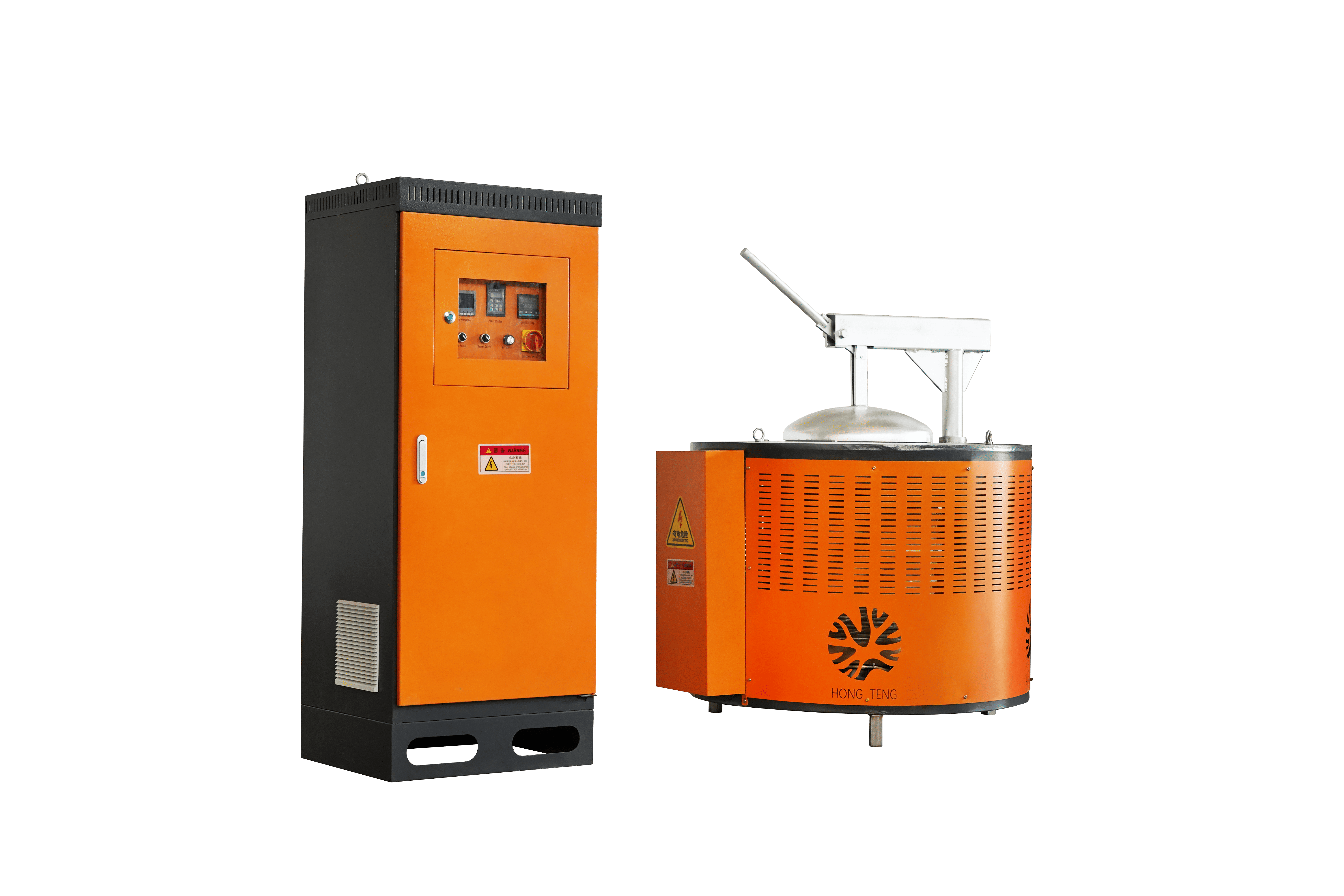
1. Construction of the High-Frequency Induction Furnace
A high-frequency induction furnace is a precision-engineered system comprising the furnace body (support frame and movable frame), a tilting mechanism, a cooling water circuit, and a power supply system. Typically, the tilting mechanism is integrated directly onto the support frame to form a unified structure.
The Furnace Body and Frame
Support Frame: Constructed from structural steel sections. Critical joints utilize insulation gaskets to prevent the frame from forming a closed electrical loop, which would otherwise generate parasitic eddy currents.
Movable Furnace Frame: To prevent electromagnetic interference and heating of the structure itself, the movable frame is made of non-magnetic materials such as brass or aluminum alloy.
The Inductor (Coil): A cylindrical inductor made of red copper tubing is mounted on the movable frame. It sits on a heat-resistant base plate and is secured to insulating columns via studs welded to each turn of the copper tube.
Tilting and Pouring Mechanism
The furnace utilizes a manual tilting system for pouring molten metal.
Components: The system consists of trunnions (hollow axles), wire ropes, reels, a transverse shaft, gears, and a manual handwheel.
Operation: The movable frame rotates on hollow trunnions supported by insulated bearings. The operator regulates the pouring speed by manually turning the handwheel.
Cooling Water Path
Cooling is essential to prevent the copper coils from melting. Water enters through a hollow trunnion on one side of the frame, passes through the power switch and the inductor coils, and exits through the trunnion on the opposite side.
2. Safety Protocols for High-Frequency Induction Smelting
Operating high-frequency vacuum tube oscillators involves exceptionally high voltages. To ensure equipment longevity and personnel safety, the following procedures are mandatory.
Electrical and Personnel Protection
Grounding: The furnace frame must maintain a solid, low-resistance ground connection.
Operator Insulation: Operators should stand on a wooden platform covered with insulating rubber mats.
Insulated Tools: All stirring rods and pokers must be equipped with high-voltage insulated handles to prevent "induction burns" caused by induced currents in the tools.
Busbar Safety: Copper busbars connecting the power supply to the furnace must be installed in dry, enclosed trenches with secure covers. Protective screens should be installed at all power outlets.
Operational Safety Requirements
Power-Off Before Pouring: The power supply must be disconnected before tilting the furnace for casting. Smelting while tilting under power is strictly prohibited to prevent electrical arcing.
Supervised Maintenance: Electrical repairs must be conducted under the supervision of a second person to monitor the power source and ensure a rapid emergency response.
Cooling Water Security
To prevent coil burnout during a power or pump failure, foundries should utilize a dual-supply system (recirculating water combined with a backup tap water line). Water pressure gauges must be installed in highly visible locations and inspected regularly to ensure the cooling pressure remains within safe operating limits.
Summary of Material Specifications
| Component | Recommended Material | Reason |
|---|---|---|
| Inductor Coil | Red Copper Tubing | High conductivity and easy water cooling. |
| Movable Frame | Brass / Aluminum Alloy | Non-magnetic; prevents induction heating of the frame. |
| Support Joints | Insulation Gaskets | Prevents eddy current loops in the structural steel. |
| Tool Handles | High-Grade Insulators | Protects operators from induced currents. |
We use optional cookies to improve your experience on our site, including through social media connections, and to serve personalized ads based on your online activity. If you refuse optional cookies, we will only use cookies that are necessary to provide you with the service. Privacy Statement
Leave your inquiry now, and get a systematic solution later.
We will contact you within one working day. Please pay attention to your email.

For any product inquiries, technical support, or service requests, contact us below:
WeChat/Whatsapp : 86-17538889778
Tel : 86-379-65188091
Address: No. H3, North Jingjin Road, Dongda Science and Technology Park, Luoxin Industrial Cluster, Luoyang, Henan, China