

-
-
PROCESSESOur products range from induction melting furnaces ranging from 50kg to 15,000KG capacity, and our induction power suppliers range from 80KW to 12,000KW to meet all melting needs.
-
ADVANTAGEHTGP provides a systematic solution for scrap aluminum melting and casting.
-
EVENTS & NEWS
Aluminum Melting and Holding Furnace
Release time:
Apr 02,2026
source:
The Strategic Guide to Aluminum Melting and Holding Furnace Technology: Optimizing Yield and Efficiency
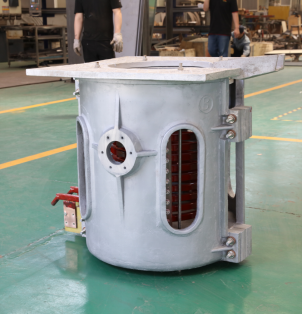
An aluminum melting and holding furnace is a specialized industrial thermal system designed to perform two critical functions in the aluminum casting process: transforming solid aluminum (such as ingots, scrap, or returns) into a liquid state and maintaining that molten metal at a precise, uniform temperature for casting.
These furnaces are the heart of die-casting, gravity-casting, and sand-casting operations, where the goal is to provide a continuous supply of high-purity molten aluminum with minimal temperature fluctuation and low oxidation loss. By integrating both melting and holding capabilities into a single unit or a synchronized system, foundries can significantly reduce energy consumption, floor space requirements, and material handling risks.
Choosing the right aluminum melting and holding furnace is a decision that impacts a facility’s Total Cost of Ownership (TCO) for decades. In modern manufacturing, where energy prices and carbon footprints are under intense scrutiny, the difference between a legacy furnace and a high-efficiency regenerative system can mean the difference between profit and loss.
1. Understanding the Functional Difference: Melting vs. Holding
In the lifecycle of molten metal, melting and holding represent two distinct thermodynamic challenges.
The Melting Phase
2. Types of Aluminum Melting and Holding Furnaces
Depending on your production volume and the type of casting , you will typically choose from three primary furnace architectures.
2.1 Reverberatory Furnaces (The High-Volume Workhorse)
In a reverberatory furnace, the heat source (burners) is located above the metal. The heat is radiated from the refractory roof and walls back into the aluminum bath.
Best for: High-volume operations and recycling scrap.
Advantage: High melt rates and excellent thermal efficiency when equipped with regenerative burners.
2.2 Crucible Furnaces (Precision and Flexibility)
Crucible furnaces use a ceramic or graphite vessel to hold the metal, with heat applied to the outside of the crucible.
Capacity: Smaller batches, usually up to $1,000\text{ kg}$.
Best for: Foundries that change alloys frequently or require extremely clean metal.
Advantage: No direct contact between the flame and the metal, which drastically reduces oxidation.
2.3 Induction Melting Furnaces (The Modern Clean Choice)
Using electromagnetic induction, these furnaces generate heat directly inside the aluminum.
Best for: Aerospace-grade casting or high-purity recycling.
Advantage: Natural electromagnetic stirring ensures a perfectly homogenized alloy and temperature throughout the bath.
3. Economic Analysis: TCO and Energy Savings Data
Case Study: Standard vs. High-Efficiency System
4. Key Technical Features to Demand from Manufacturers
When vetting an aluminum melting and holding furnace, do not just look at the price tag. Evaluate these five technical pillars:
Refractory Lining Quality: Demand "non-wetting" castables. These materials prevent molten aluminum from penetrating the furnace walls, which reduces dross buildup and extends the furnace's life.
PLC-Based Control Systems: Modern furnaces must have automated ramping and "soak" cycles. This ensures the metal is not overheated, which prevents hydrogen absorption—the primary cause of porosity in aluminum castings.
Sealing Integrity: A furnace with poor door seals is a "money pit." Proper pneumatic seals prevent cold air ingress and reduce energy waste during holding periods.
Dross Management: Designs that allow for easy "fluxing" and skimming are essential to keep the molten bath clean and the metal yield high.
5. Reducing Metal Oxidation Loss (The Silent Profit Killer)
Aluminum has a high affinity for oxygen. When exposed to heat and air, it forms aluminum oxide (dross) on the surface. In a typical aluminum melting and holding furnace, "burn-off" or metal loss can range from $1\%$ to $5\%$.
How to Minimize Oxidation:
Low-Velocity Burners: Reducing the speed at which the flame hits the metal surface prevents the "protective" oxide layer from being blown away, slowing further oxidation.
Atmosphere Control: Maintaining a slightly "reducing" atmosphere (low oxygen) inside the furnace chamber significantly lowers dross formation.
Submerged Melting: For scrap-heavy operations, designs that submerge the scrap below the liquid line quickly prevent the light aluminum pieces from burning before they can melt.
6. Global Support and Maintenance: Ensuring 24/7 Stability
If your aluminum melting and holding furnace goes down, your entire casting line stops. This is the most significant risk for overseas buyers.
The "Global-Local" Support Framework
Standardized Spares: Ensure the manufacturer uses Siemens, Schneider, or ABB components for the electrical cabinet. This allows you to source a replacement breaker or relay from a local electrical wholesaler in hours, not weeks.
Remote Monitoring: Choose systems with IoT-enabled PLCs. This allows the manufacturer's engineers to "remote in" and troubleshoot temperature sensor errors or burner faults from halfway across the world.
Pre-Packed Maintenance Kits: A reputable manufacturer should provide a "First-Year Spares Kit" that includes thermocouples, gaskets, and filter elements in the initial crate.
7. Compliance, Safety, and Environmental Standards
As a technical director or engineer, ensuring your furnace meets global safety standards is paramount for insurance and regulatory compliance.
Safety Interlocks: Every furnace must have flame-failure protection, high-temperature limit alarms, and emergency gas shut-off valves.
Emission Controls: For foundries in Europe or North America, integrated "baghouses" or filtration systems may be required to capture particulates from the melting of "dirty" scrap.
CE/UL Certification: Ensure the electrical and gas manifolds meet the specific safety codes of your region.
FAQ Section: Quick Answers for Decision Makers
Q1: Is it better to have separate melting and holding furnaces?
Answer: For very high-volume operations (over $5$ tons per hour), a dedicated melting tower (shaft furnace) feeding multiple holding furnaces is more efficient. For small-to-medium foundries, an integrated aluminum melting and holding furnace saves space and reduces the oxidation that occurs when transferring molten metal.
Q2: How often should the refractory lining be replaced?
Answer: With proper maintenance and non-wetting materials, a high-quality lining should last $5$ to $8$ years. However, poor cleaning habits (not removing dross) can reduce this to $2$ or $3$ years.
Q3: What is the most energy-efficient way to melt aluminum?
Answer: Currently, Induction Furnaces have the highest thermal efficiency. However, for large-scale operations, Regenerative Gas Reverberatory Furnaces are more cost-effective due to the lower cost of natural gas compared to electricity in many regions.
Q4: Can I melt aluminum scrap in a holding furnace?
Answer: While a holding furnace can melt small amounts of scrap, it is not designed for it. Holding furnaces have lower burner power. Forcing a holding furnace to melt large amounts of scrap will lead to massive dross formation and very high energy bills.
We use optional cookies to improve your experience on our site, including through social media connections, and to serve personalized ads based on your online activity. If you refuse optional cookies, we will only use cookies that are necessary to provide you with the service. Privacy Statement
Leave your inquiry now, and get a systematic solution later.
We will contact you within one working day. Please pay attention to your email.

For any product inquiries, technical support, or service requests, contact us below:
WeChat/Whatsapp : 86-17538889778
Tel : 86-379-65188091
Address: No. H3, North Jingjin Road, Dongda Science and Technology Park, Luoxin Industrial Cluster, Luoyang, Henan, China