

-
-
PROCESSESOur products range from induction melting furnaces ranging from 50kg to 15,000KG capacity, and our induction power suppliers range from 80KW to 12,000KW to meet all melting needs.
-
ADVANTAGEHTGP provides a systematic solution for scrap aluminum melting and casting.
-
EVENTS & NEWS
Comparison of Industrial Aluminum Melting Furnace Powered by Different Fuel
Release time:
Feb 04,2024
source:
Industrial aluminum melting furnaces are equipment used to smelt aluminum and aluminum alloys. They can be divided into many types according to the fuel used. The following is a comparison of industrial aluminum melting furnaces with different fuels for your reference.
Gas-fired Aluminum Melting Furnace
Advantages
The energy efficiency is high because the gas combustion is relatively complete and there is less heat loss.
Gas prices are relatively stable, so long-term running costs are low.
The operation of the gas furnace is relatively simple and it is easy to control the temperature and smelting process.
Shortcomings
The heating rate is slower and it takes longer to reach the melting point of aluminum.
The furnace needs to be cleaned regularly to ensure the purity of the aluminum liquid.
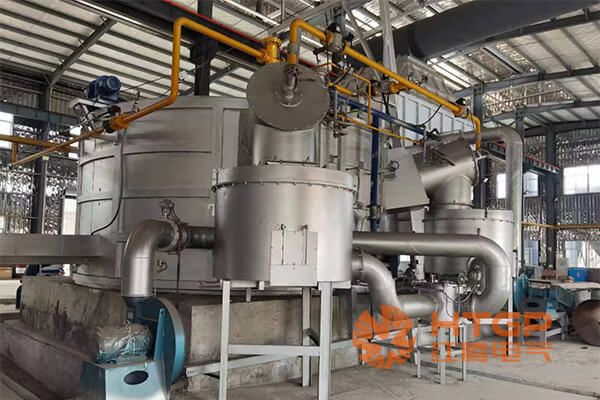
Oil-fired Aluminum Melting Furnaces
Advantages
It has high energy efficiency and the heat released by fuel combustion is large, which can quickly reach the melting point of aluminum.
The oil furnace heats up quickly and is suitable for rapid smelting and alloying processes.
Shortcomings
The operation is complex and requires professionals to operate and maintain.
Fuel prices fluctuate widely and long-term operating costs are unstable.

Coal-fired Aluminum Furnace
Advantages
The cost of use is low, and the price of coal is cheaper than gas and oil.
Shortcomings
The energy efficiency is low, coal combustion is insufficient, and heat loss is large.
The heating rate is slow and it takes a long time to reach the melting point of aluminum.
It pollutes the environment. Coal combustion will produce a large amount of smoke, dust, and waste gas, and environmental protection equipment needs to be equipped for treatment.
Induction Aluminum Melting Furnace
Advantages
High efficiency and energy saving: The induction aluminum melting furnace adopts the principle of induction heating, which can quickly heat the aluminum liquid to the melting point and has high energy efficiency.
Environmental protection: Because it does not use traditional combustion methods, it can reduce the emission of exhaust gas and smoke and reduce the impact on the environment.
Safe and reliable: The induction aluminum melting furnace adopts a fully enclosed structure, which is simple to operate and can reduce the occurrence of accidents.
High flexibility: Heating power and melting speed can be adjusted according to different production needs, with strong adaptability.
Shortcomings
High equipment costs: The induction melting aluminum furnace has a complex structure and high manufacturing and maintenance costs.
Professional operators are required: Due to the special structure and operating requirements of the induction aluminum melting furnace, professional operators are required to ensure the smooth progress of the melting process.

Analysis of other aspects
Environmental Protection
Gas furnaces and oil furnaces will produce a certain amount of exhaust gas and smoke during the combustion process, but the impact on the environment can be reduced by installing environmentally friendly equipment.
The induction melting aluminum furnace uses a non-combustion method for heating, which avoids the waste gas and smoke produced by traditional combustion methods and reduces atmospheric pollution. At the same time, because it does not use traditional fuels, it can also reduce dependence on fossil fuels and has a certain degree of sustainability.
Coal-heated furnaces pollute the environment most seriously. Not only do they produce a large amount of waste gas and smoke during the combustion process, but the coal mining and transportation processes may also cause damage to the environment.
Safety
Gas and oil furnaces require attention to the risk of fire and explosion, especially during fuel storage and use.
The induction aluminum melting furnace adopts a fully enclosed structure, which can reduce the splashing of molten aluminum and gas leakage, and improve the safety of production. At the same time, the equipment has a high degree of automation, which reduces manual operations and reduces the probability of man-made accidents. However, although induction aluminum melting furnaces are safer, they also require regular maintenance and inspections to prevent electrical failures and accidents.
Due to the use of solid fuel in coal-fired furnaces, there is a risk of coal explosion and suffocation.
Flexibility
Gas furnaces, oil furnaces, and induction aluminum melting furnaces are more flexible and can adjust the temperature and melting speed according to production needs.
Coal-heated furnaces are less flexible than other fuel types due to their slow heating rate and complex operation.
Maintenance Cost
The maintenance cost of gas furnaces and oil furnaces is relatively high and requires regular maintenance and replacement of parts.
Due to the complex structure of the induction melting aluminum furnace, the manufacturing and maintenance costs are relatively high. At the same time, equipment requires regular inspection and maintenance to ensure its normal operation and service life.
Coal-fired furnaces have lower maintenance costs, but due to their shorter lifespan, they may be similar to gas furnaces in the long term.
Degree of Automation
Induction aluminum melting furnaces and some high-end gas furnaces are equipped with automated control systems that enable remote monitoring and control. While other types may require manual operation and monitoring.
Cost of Investment
The investment costs of various aluminum melting furnaces vary greatly depending on the equipment model, brand, and configuration. Generally speaking, the investment costs of aluminum induction melting furnaces and gas furnaces are higher, while the investment costs of oil furnaces and coal-fired furnaces are relatively low. However, specific investment decisions also need to take into account multiple factors such as equipment life, operating costs, and production needs.
At Last
After comprehensively comparing industrial aluminum melting furnaces with different fuels, you can choose suitable equipment according to production needs and actual conditions.
We use optional cookies to improve your experience on our site, including through social media connections, and to serve personalized ads based on your online activity. If you refuse optional cookies, we will only use cookies that are necessary to provide you with the service. Privacy Statement
Leave your inquiry now, and get a systematic solution later.
We will contact you within one working day. Please pay attention to your email.

For any product inquiries, technical support, or service requests, contact us below:
WeChat/Whatsapp : 86-17538889778
Tel : 86-379-65188091
Address: No. H3, North Jingjin Road, Dongda Science and Technology Park, Luoxin Industrial Cluster, Luoyang, Henan, China