

-
-
PROCESSESOur products range from induction melting furnaces ranging from 50kg to 15,000KG capacity, and our induction power suppliers range from 80KW to 12,000KW to meet all melting needs.
-
ADVANTAGEHTGP provides a systematic solution for scrap aluminum melting and casting.
-
EVENTS & NEWS
Furnace temperature
Release time:
Jan 23,2025
source:
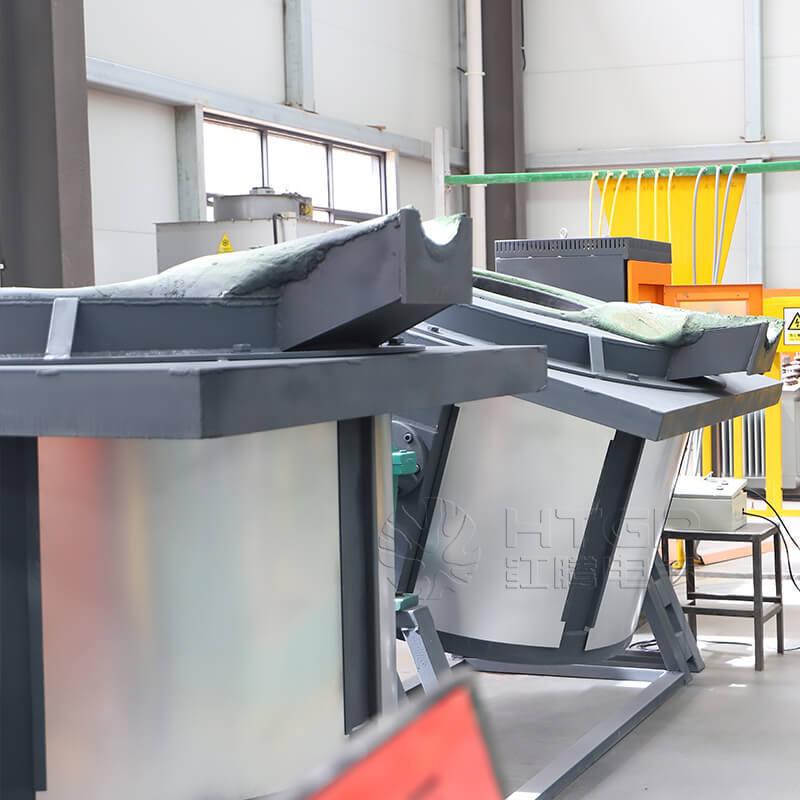
Furnace temperature control
The title of this chapter is somewhat inaccurate, because it is the temperature of the charge (workpiece) that needs to be controlled, not the temperature of the furnace. Despite this inaccurate title, it has been retained in its current form because it has been widely used.
The purpose is to bring the surface of the charge to a given temperature according to the requirements of the metallurgist and to maintain this temperature until a specified temperature uniformity is achieved in the charge, or to restore the temperature of the charge to a specified heating and cooling cycle.
In both cases, it is required to maintain the uniformity of temperature in the charge for all parts of the furnace. The interior of the charge should reach a given temperature without exceeding this temperature, and the reason is very simple. For each specific process (rolling, forging, bending, extrusion, annealing, heat treatment) and for each specific material, there is a minimum temperature that must be reached for the process to proceed smoothly.
Temperatures exceeding the required value are not only a waste of heat, but also often have adverse consequences, such as the outline of the two small drums. Section
Such as excessive oxide scale, decarburization and operating difficulties.
2. Temperature control in various parts of the furnace
If each exposed surface of the charge obtains the same amount of heat per unit time, then
temperature uniformity is achieved for all parts of the furnace. This statement applies to intermittent furnaces. In continuous furnaces, the temperature distribution along the width of the furnace must be uniform.
It should also be pointed out here that for some processes, the uniformity of the furnace temperature does not produce the best effect. There is an example to prove the correctness of this statement. On the expansion mill, all parts of a long tube should arrive at the mill at the same temperature. Therefore, when the steel pipe comes out of the furnace, its rear must be hotter than the front. The steel pipe is rolled out from the side of the furnace.
We use optional cookies to improve your experience on our site, including through social media connections, and to serve personalized ads based on your online activity. If you refuse optional cookies, we will only use cookies that are necessary to provide you with the service. Privacy Statement
Leave your inquiry now, and get a systematic solution later.
We will contact you within one working day. Please pay attention to your email.

For any product inquiries, technical support, or service requests, contact us below:
WeChat/Whatsapp : 86-17538889778
Tel : 86-379-65188091
Address: No. H3, North Jingjin Road, Dongda Science and Technology Park, Luoxin Industrial Cluster, Luoyang, Henan, China